
If you’re coming to Bali to visit, then you’re probably going to need a visa, but what visa should you get? Well, a visa-on-arrival is one of the main options available to almost everyone.
So, let’s take a look at your options and how you go about getting a visa-on-arrival if that’s the visa that makes the most sense for you.
Tl:DR?
Unless you are from Afghanistan, Bangladesh, Guinea, Israel, Kosovo, Liberia, Nigeria, North Korea or Somalia, you qualify for a visa-on-arrival when arriving in Indonesia.
You can apply for this visa as long as you arrive in Bali by air at Denpasar Airport and report to the visa-on-arrival desk.
Note: This visa costs 500,000 IDR, which must be paid at the visa issuing desk.
About Visas For Foreign Tourists In Bali
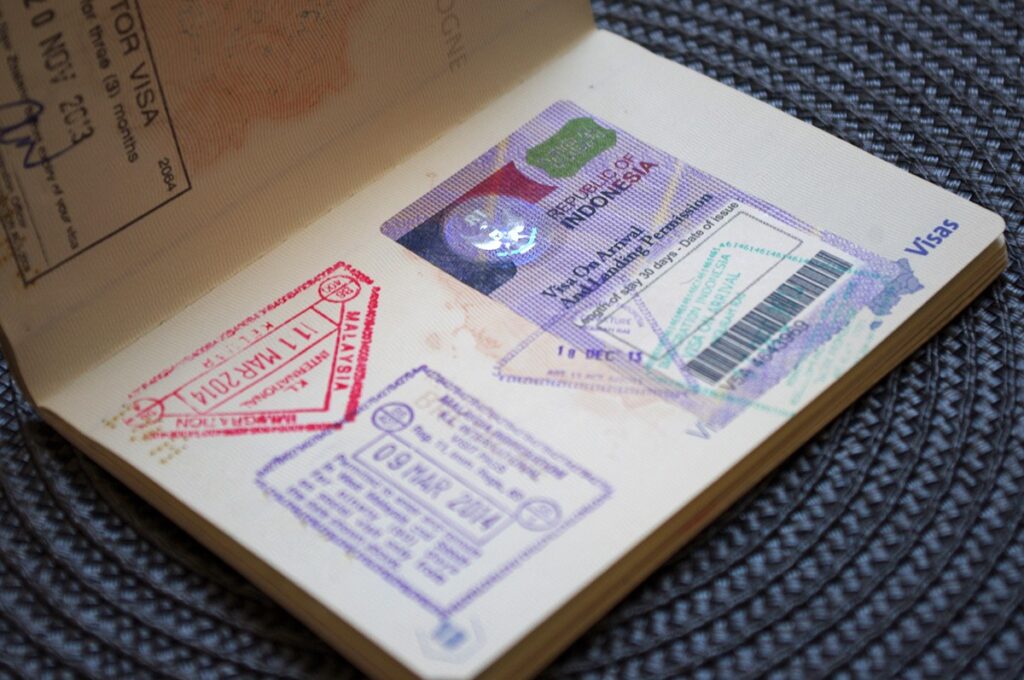
It is important to note that if you are visiting Indonesia (or Bali) for the purposes of tourism, the most common form of visa is a B1 Visa (a Visit Visa).
This visa is a 30-day single-entry visa, NOT a multiple-entry visa, which can be extended once for an additional period of 30 days at a local immigration office. Once this period is over, you must exit Indonesia and get a new visa before re-entering the country.
The B1 visa is available both as an electronic visa, which can be purchased online from the official e-visa website and as a visa on arrival.
There are other visas that may be of interest to some tourists, which we will discuss at the end of this article, but for the vast majority of tourists, the B1 visa is the best option.
Do I Need A Visa For Bali?
Indonesian nationals do not need a visa to travel to Bali. They have the right to visit and spend as much time in Bali as they wish.
In addition, passport holders from ASEAN countries (that is, Brunei, Cambodia, Laos, Malaysia, Myanmar, Philippines, Singapore, Thailand, Vietnam and Timor Leste) are eligible for a free 30-day visa exemption. This exemption provides a 30-day period of entry to Indonesia at no charge. However, it is important to note that you cannot extend a visa exemption and must leave Indonesia by the end of the 30-day period.
Citizens of all other countries will need to get either a visa online or a visa on arrival.
However, citizens of Afghanistan, Bangladesh, Guinea, Israel, Kosovo, Liberia, Nigeria, North Korea or Somalia are unable to apply online or for a visa on arrival. They must obtain a visa from their nearest Indonesian embassy prior to travel.
Electronic Visa or Visa On Arrival?
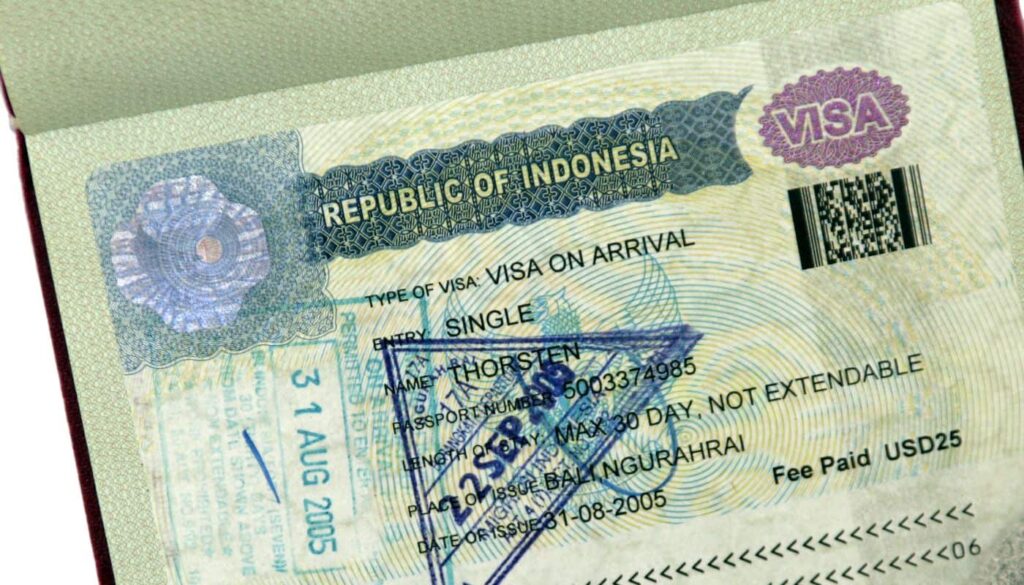
There are two options for obtaining a B1 visa. The first is an e-voa (an electronic visa-on-arrival), which can be applied for in advance through the official e visa website.


The URL for this site is as follows: https://evisa.imigrasi.go.id/. This is the official immigration website.
This is the only authorised site for e-visas from the Indonesian government. The web address tells you that it is an official site “.imagrasi” stands for “immigration”, “.go” for “government” and “.id” for “Indonesia”.
While there are other sites you can use to obtain an Indonesian B1 Visa, you should be aware that these are agency sites that will charge an additional fee over the 500,000 IDR levied by the government. There is no need to pay an agency, as you can easily complete the online process yourself.
E-VOA – How To Apply Online
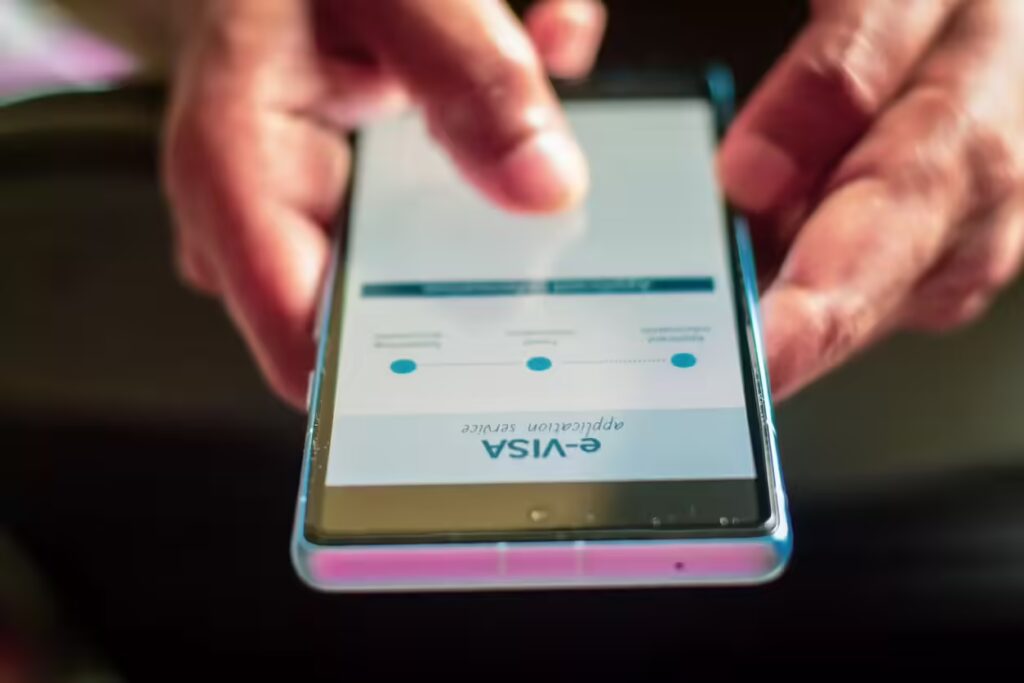
Applying for a B1 visa is very easy online. Visit the link above and then click “Apply”.
First, select your nationality. Then, select the main purpose of your visit to Indonesia as “General, Family or Social”, do not select “Work or Tourism”.
Next, select the sub-purpose of your visit as “Tourism, Family Visit and Transit” and then select a B1 Tourist Visa from the final menu.
The site will then offer a brief explanation of the visa, and you can click Detail & Apply when ready to proceed.
You will then need to upload a copy of your passport’s first page, and a photograph of yourself which must meet the conditions laid out there (e.g. it should be a .JPEG, .JPG or .PNG, have a resolution of at least 400×600 px, have a file size of no more than 2 Mb and be properly composed).
You will then be asked to complete a form and attach some supporting documents for your visit to Indonesia. Finally, there is a checklist for you to complete before being sent to the payment gateway for your visa.
Before you pay for your e-voa, you should be aware:
- Visa approval times can range from “instant” to 5+ days! We strongly recommend that you apply at least 72 working hours before a flight to avoid any issues.
It is also important to note that every single person in your party must have their own e-voa, including infants and children (even if the infant/child is included on the parents’ passport).
You should also be aware:
- You are legally required to have at least 6 months of passport validity from your date of arrival in Indonesia. We should also note that there are reports of visitors being turned away because they did not have 6 months’ validity from the date they were due to depart Indonesia.
- Do not travel with damaged passports. Indonesian authorities have a reputation for refusing entry to travellers with even minor damage to their passports, particularly if the damage is on the passport photo page.




- While officially local authorities will have a copy of your visa on file when you visit Bali, it’s best to keep a copy of the e-visa on your phone and even to print a copy to hand to local authorities officials if requested to do so.
- An e-voa allows you to use the electronic arrival gates at Denpasar Airport. However, if the gates refuse entry, you do not need to panic; you just visit an immigration officer in person. They are right next to the e-gates.
- Having a visa does not guarantee you entry to Indonesia. The local immigration office or any immigration officer may refuse entry to the Republic of Indonesia under any circumstances they deem necessary.
- There may be a small online processing fee in addition to the visa fee. This depends on the credit card processor and not the government here.
Visa-On-Arrival (VOA) – How To Apply At The Airport
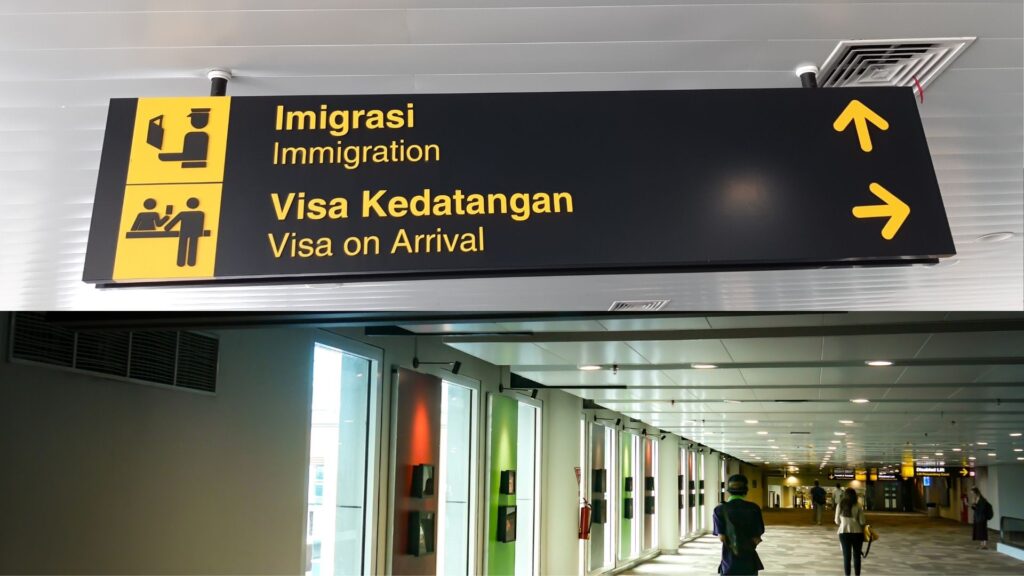
This is the second visa type. It is very easy to apply for a visa on arrival at Denpasar Airport. The first counter that you will come across as you head to immigration is the visa-on-arrival issuing desk.
Join the queue, present your passport to the person on the desk when you reach the front of the queue, allow them to take your photograph, complete some basic details on the computer and pay the 500,000 IDR fee. You will then be issued a visa-on-arrival.
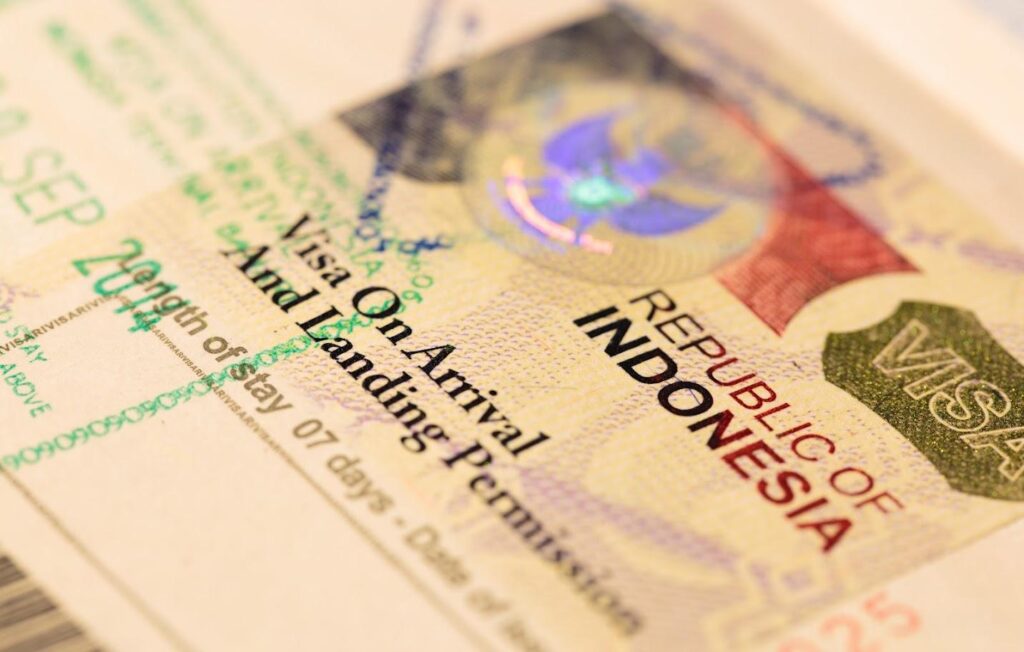
You will need two empty pages (consecutive pages) for the stamp for this visa. It’s also important to note that you cannot use a temporary passport, an emergency travel document or any other document except a full, valid passport to apply for this visa.
There are two potential downsides of this: 1. The queues for this can be quite long at certain times, and that means more time spent in the airport, 2. You cannot use the e-gates and must visit an immigration officer, which can slow the process down again. Otherwise, it is exactly the same B1-visa that you could get from the visa online service.
In addition, this visa cannot be converted into a temporary stay permit (you will need to leave Indonesia and return for this).
Finally, while this visa is readily available when you enter Bali by air, not all international entry points in Indonesia can provide this service, and it’s important to check before you arrive if Bali Airport is not your first port of call.
Other Documents Needed To Enter Bali
It’s important to know that the appropriate visa is just one of several documents you may/will need to enter Bali, the others include:
- An All-Indonesia declaration form – this is a combined arrival card, health declaration, and customs declaration. You need a QR code from this process to pass through customs. If you don’t fill this in before you arrive, you can complete it online in the airport, but it’s easier to get it done before you fly.


- An onward flight booking – while, in general, most people pass through the airport without local officials challenging their travel plans, a return flight booking is a condition for issuing the visa on arrival, and if you don’t have it, you can be denied entry. This isn’t common, but it is possible.
- A copy of the tourist levy payment – in addition to a visa fee, you are expected to pay a tourist levy to enter Bali. This can be done online before you arrive in the country. While it is unlikely this will be checked during your entry to Bali, it is possible that you may be asked to demonstrate that you’ve paid elsewhere on the island.
How To Extend A Visa-On-Arrival
Whether you bought your visa at the airport or online, the B1 visa can be extended by 30 days if you want to stay a little longer in Bali or Indonesia.
To extend, you should visit the nearest immigration office about a week prior to the expiry of your visa (and up to two weeks before during major holiday periods in Indonesia). You will then submit your passport and pay an extension fee of 850,000 IDR.
Other Tourist Visas For Bali
If you intend to stay in Bali for longer than 60 days, then you may wish to apply online for a C1 Visa (Tourist Visit Visa).
This visa is valid for 60 days, but can be extended twice for an additional period of 60 days each time, giving a maximum stay of 180 days in total.
However, you should be aware that in addition to the documents required for a B1 visa, you will also be required to submit your return ticket out of Indonesia and a bank statement demonstrating enough funds to pay for your time in Indonesia as part of the application process.
If you wish to apply for this visa, you use the same immigration portal as the one above, but select a C1 Visa instead of a B1 visa.
Final Thoughts On A Bali Visa On Arrival
While the visa on arrival is often the ideal visa for foreign tourists, it’s easier to get an e-visa in advance for most people, which means you don’t need to join an additional queue at Denpasar Airport.
However, if your e-visa is spoiled, your payment is rejected, or something else prevents you from obtaining an online visa, then a visa on arrival is a good option.