Galungan and Kuningan are two of the most important holidays in Bali. If you’re visiting the island around these times, chances are high that you’ll come across a parade or two, with a group of children dancing while wearing wooden wild boar or pig masks. The Balinese call this ritual “Ngelawang”.
This guide offers a glimpse into this sacred ritual and its origin, including when and where you can expect to catch one of these parades.
Ngelawang is just one of the many traditional ceremonies taking place here in Bali. If you’re on the island now or planning a visit soon, be sure to take time to get to know some of these local traditions. They’re the heartbeat of this island and a big part of what makes Bali so special.
What Is Ngelawang?
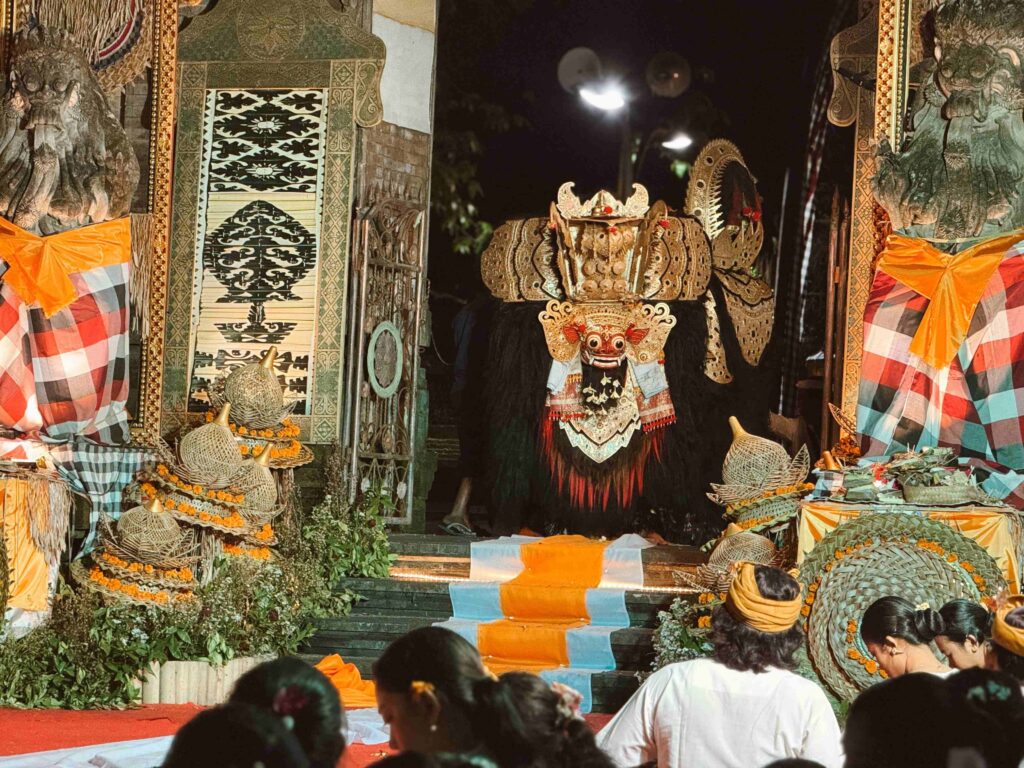
Ngelawang stems from the Balinese word ‘lawang’, which means ‘door’, and Ngelawang literally means ‘to go door to door’.
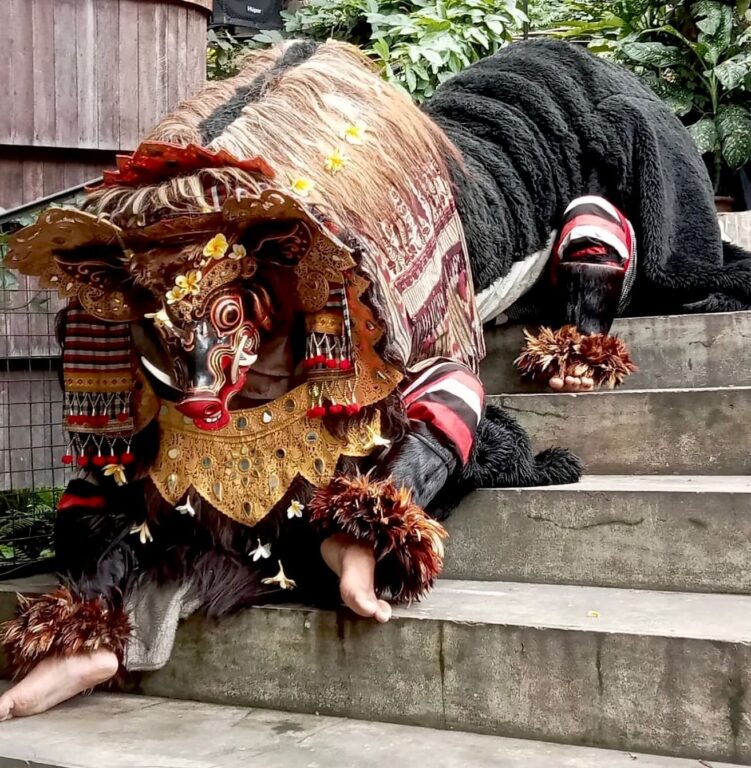
This tradition is mainly performed by a group of children and teenagers who parade through the neighbourhood, going door to door while dancing in a wild boar or pig mask called Barong Bangkung. This barong pig figure is unique to the culture of the island.
The procession is held during the holy 10-day period between Galungan and Kuningan Day, and it’s accompanied by a traditional Gamelan orchestra.
The main purpose of this dance is to expel evil forces, ward off misfortune, and bring protection to human life and positive energy to the homes. When the parade stops at a house, the homeowners will pray and offer a canang sari with a small monetary donation as an act of gratitude. Money is, of course, a universally understood act of appreciation.
The Origin Of Ngelawang And Barong Bangkung
The history of Ngelawang is deeply rooted in Balinese mythology. It is believed that during the six-month Balinese Hindu calendar cycle, the veil between the worlds of good and evil grows thin.
This allows the Bhuta Kala (or Buta Kala), the evil spirits and lower forces of the universe in Balinese Hindu mythology, to wander about causing harm, bad luck, and disease within the community.


According to the mythology, the Balinese Hindu water goddess Dewi Ulun Danu then transformed herself into a wild boar or pig to help villagers fight off and neutralise the evil spirits of the Bhuta Kala and protect the community. This mythical animal figure is what’s called Barong Bangkung, meaning a female wild boar or pig.
Ngelawang Tradition Now
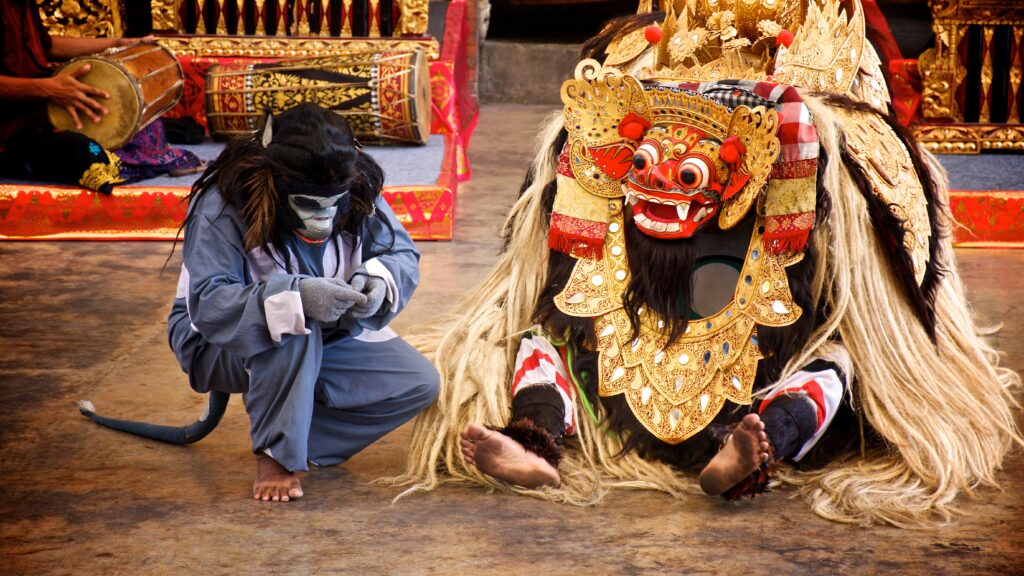
The Ngelawang tradition has been carried out for centuries and passed down through generations.
Originally, Ngelawang was a deeply sacred and highly guarded ritual that only the community’s elders were allowed to perform using the temple’s Barong. During the procession, strands of Barong Bangkung’s hair would sometimes fall, and people would pick them up to keep as powerful, auspicious amulets.
To this day, this tradition still holds significance for the Balinese as a way of celebrating the victory of good over evil, just as it did in the past. But it has also evolved into a beloved cultural performance, paraded through villages and along streets across most of Bali’s regencies and enjoyed by visitors and locals alike.
Where To See Ngelawang In Bali
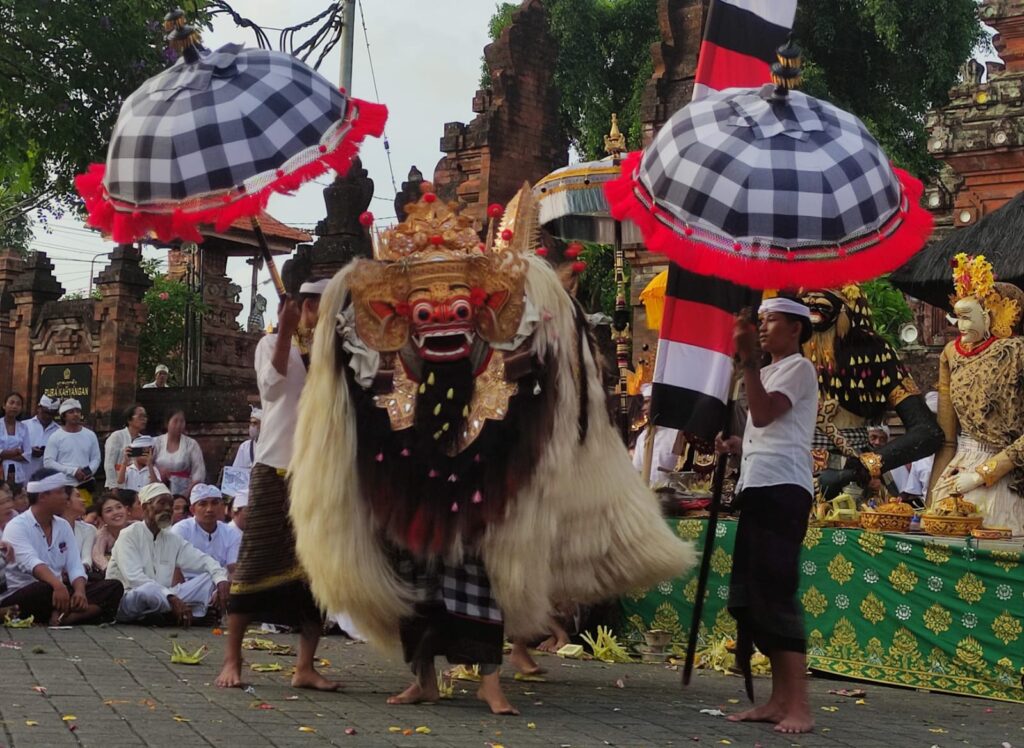
If you’re visiting Bali around Galungan and Kuningan, these parades are a common sight all across Bali. You’ll likely run into them whether you’re in rural parts of the island or in the bigger cities and towns.
As you walk or drive through the streets, keep an eye out for a group of kids in wooden masks navigating the alleys, with the clanging of gamelan music in the background.
But of course, we don’t expect you to track down these often-unannounced local village ceremonies. As an alternative, there are commercial and cultural hubs across the island that offer traditional Balinese performances, including Ngelawang, catering specifically to international audiences in a more structured setting, such as Sawelas Nusantara in Nusa Dua.
What To Do As a Tourist If You Encounter Ngelawang
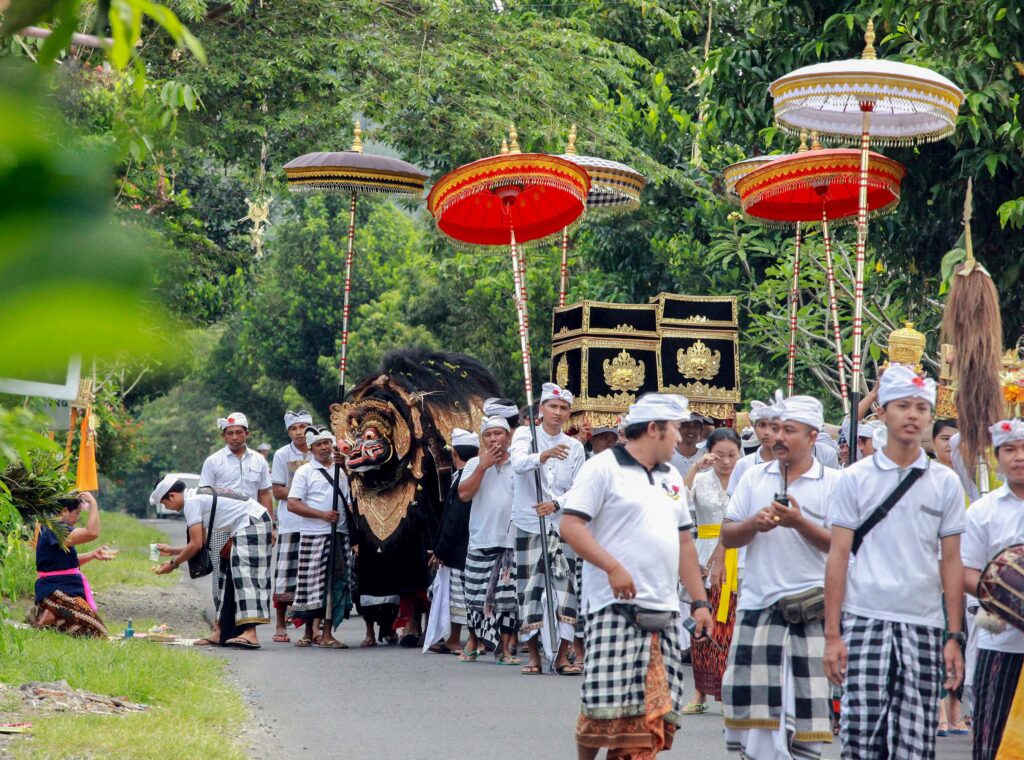
If you catch a Ngelawang parade along your way, or if it arrives at your accommodation or stops near you, there are several things you can do.
- Watch and enjoy the parade on the side of the street or at your accommodation’s gate. Make sure you stand clear of their path.
- Take photos or videos of the performers. Remember to never use a flash when documenting the procession, as it can blind the performers and disrupt the overall atmosphere.
- You can also take part by giving a small cash tip. It’s optional but appreciated.
One important thing to keep in mind is that you should always be respectful of the performers and everyone involved.
For example, if you happen to wear revealing attire during the parade, put on a cover-up if you decide to approach them closely. And if you have no cover-up available, step slightly back out and enjoy the performance from a distance to respect the sacred nature of this ritual.


FAQs
What Is Galungan In Bali?
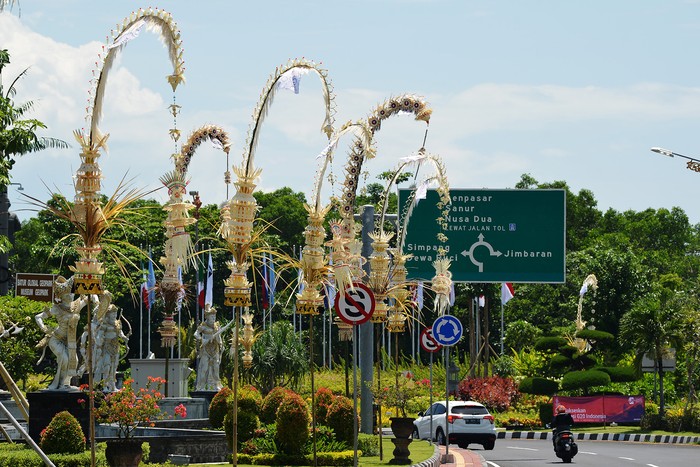
Galungan is a religious holiday in Bali that celebrates the victory of good (Dharma) over evil (Adharma). It’s one of the most important holidays for Balinese Hindus, along with Kuningan and Nyepi. The celebration lasts for 10 days and occurs every 210 days according to the traditional Balinese calendar, rather than the Gregorian calendar. We’ve covered this in depth in our guide to Galungan here.
What Is Kuningan Day In Bali?
Kuningan Day is a religious holiday in Bali that marks the end of the Galungan celebration. The Balinese believe that it’s the day when the spirits of their visiting ancestors depart from the earthly realm and return to heaven. To learn more, read our guide to Kuningan Day in Bali.
What Is Canang Sari?
Canang sari is an offering in the form of a small basket made from banana or palm leaves and filled with flowers, incense, and other items such as rice, oil, and salt. It represents the devotion of Balinese Hindus to the Gods and also serves as an expression of gratitude for their blessings.