Bali, the Island of the Gods and a thousand temples, is a true paradise for everyone who wants to have a deeper connection with ancient beliefs and rituals.
Following the special Balinese calendar, the day-to-day life of Balinese people is laced with offerings, temple visits and unique ceremonies. One of such – Makare Kare festival or Perang Pandan is only found in one tiny village and is an absolute treasure for curious tourists.
If you’re visiting Bali in June, this guide to the Makare Kare combat ritual will help you plan a one-of-a-kind activity.
Summary: All You Need To Know About Attending Makare-Kare Upfront
- Makare Kare is an annual festival dedicated to the God of War, Indra, and it takes the form of a ritual battle between male villagers. Boys from 7 years old can participate.
- Bali hosts this event in one of the oldest villages, Tenganan village, every June.
- Foreigners are welcome to visit in person. However, if you can’t handle the sight of blood, this event may be too sensitive for you.
Makare Kare Festival: What Is It Exactly?
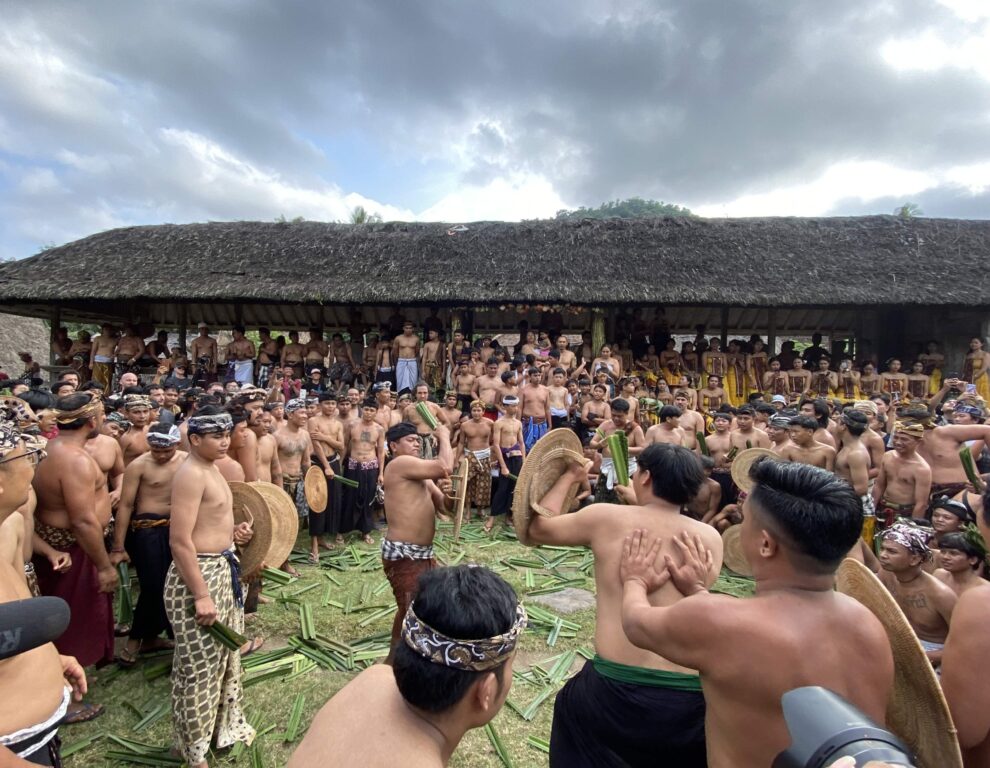
Makare kare festival, also called mageret pandan, pandan war, or Perang pandan, is an annual ritualistic battle in Balinese culture, celebrating boys coming of age and honouring warrior god Indra, protector of the sky and the community of the village.
It is one of the few remaining forms of traditional dances from Bali Aga, the indigenous Balinese people, preserving the pre-Hindu customs passed down through generations (awig-awig).
Bali Aga people speak their own native dialect, follow a very communal, collectivist lifestyle, and encourage marriages strictly within their own tribe.
For them, the supreme God is the Vedic lord Indra – the God of War, unlike the traditional Balinese Hindu trinity of Tri Murti (Brahma the Creator, Wisnu the Sustainer and Siwa the Destroyer).

The Legend Of Makare Kare Battle
Once upon a time, there was a tribe of courageous warriors, Wong Paneges. Lord Indra was so impressed by the fight spirit that he gave them a beautiful piece of land, with ocean views and abundant green hills around.
This was how Tenganan village was created.
However, later in history, legend has it that the region was ruled by a tyrant, King Maya Denawa. He was so arrogant and abusive of power that he decided to make people worship him instead of the gods. So he declared all rituals and ceremonies forbidden.
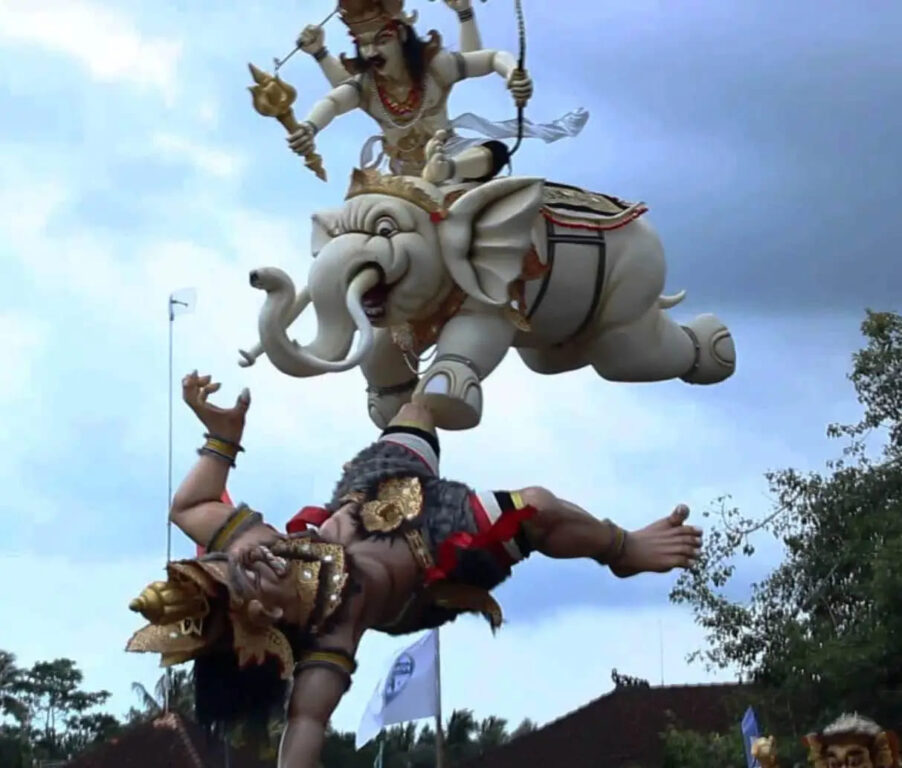
As you can imagine, God Indra wasn’t happy about it, and he came down to Earth to defeat the King, which he had no problem doing.
Mageret Pandan or Makare Kare ritualistic battle is an homage to the fight between God and King and a celebration of Indra’s victory.
According to the stories, it has always been a symbol of fertility, protecting land, community, and courage.
Where Does Makare Kare Festival Happen?
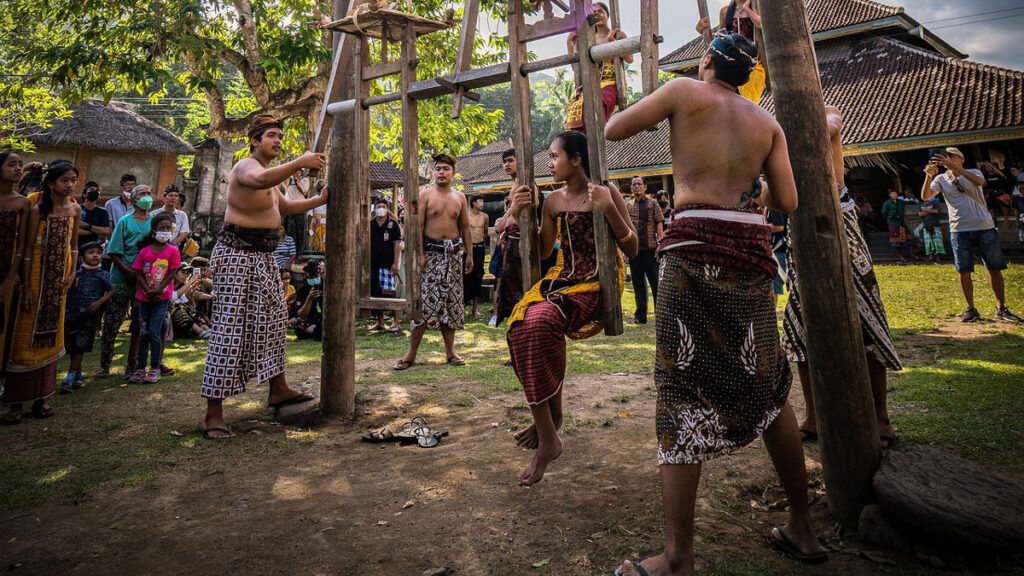
Makare Kare or Pandanus War are held in Tenganan village in Karangasem regency, Bali. This village is just 3 kilometres away from the East Coast town of Candidasa.
This traditional village sits tucked away between jungle and forests, about 70 kms from Denpasar. It takes about 3 hours to get here from Canggu or Uluwatu.
When Is Makare Kare Festival?
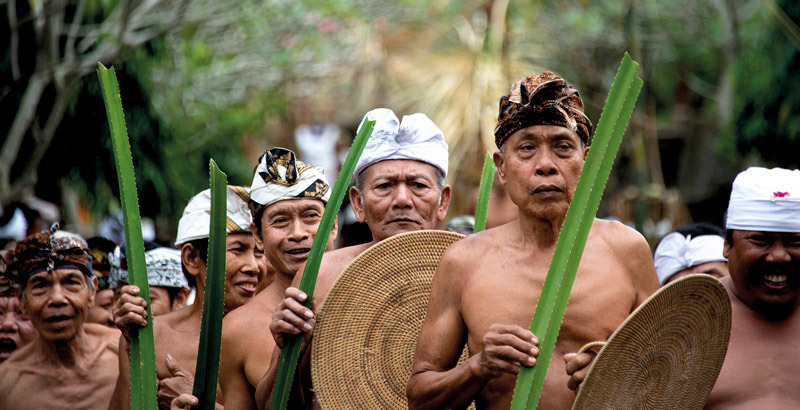
Makare Kare is a part of the Usaba Sambah festival, a month-long celebration dedicated to Indra (warrior god), other deities, and ancestors, held during the fifth month on the Balinese calendar (sasih Kalima).
Usually, Pandan Wars are carried out for two days somewhere in the second half of June, but exact dates are announced closer to the event, but no earlier than six months before.
Everything usually starts in the afternoon, with people gathering at the village hall at around 2 PM.
However, the preparations may take the whole week leading up to the ceremony, so you can make a trip here before Makare Kare, too.
What To Expect During Makare Kare, aka Pandan War?
The Makare Kare ritual is the highlight of the Usaba Sambah festival, and it lasts for two days at the end of June. Boys from 7 years old. can participate in this ritual combat, but no girls are allowed.
The preparation takes about a week with gamelan music practice, assembling a stage with coconut trees, decorating village houses, and preparing traditional outfits and offerings.
Before the “war” starts, all the male villagers have a moment to pray and share tuak, palm wine, served in cups made of banana leaves.
This ritual drinking is a symbol of brotherhood and release of any negative energy, as even though boys are about to fight, they are not allowed do it with aggression.
The Fight
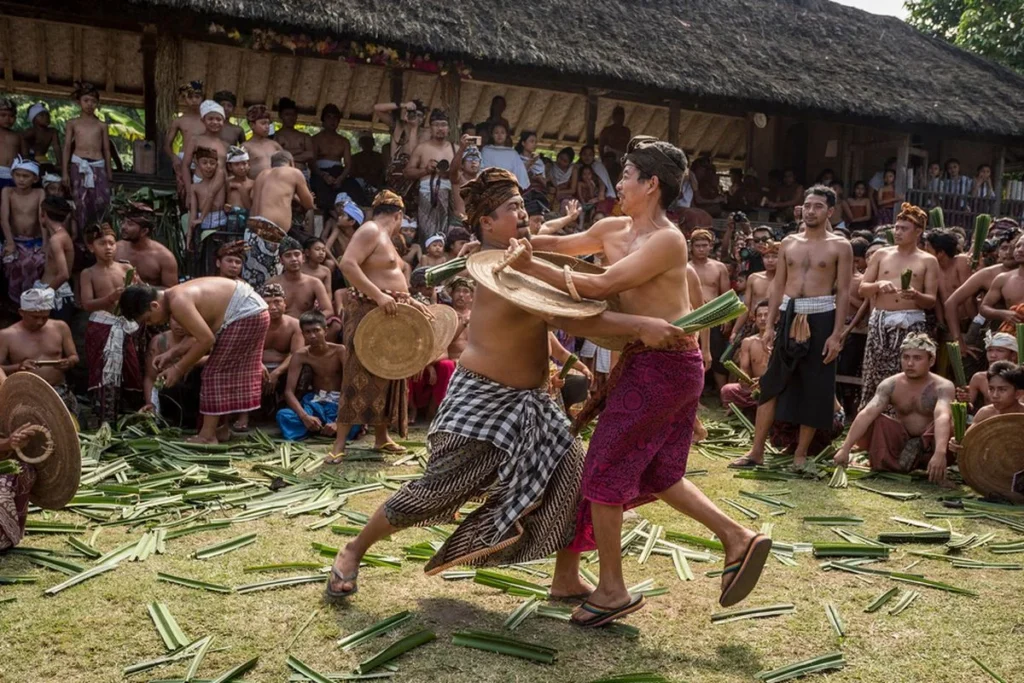
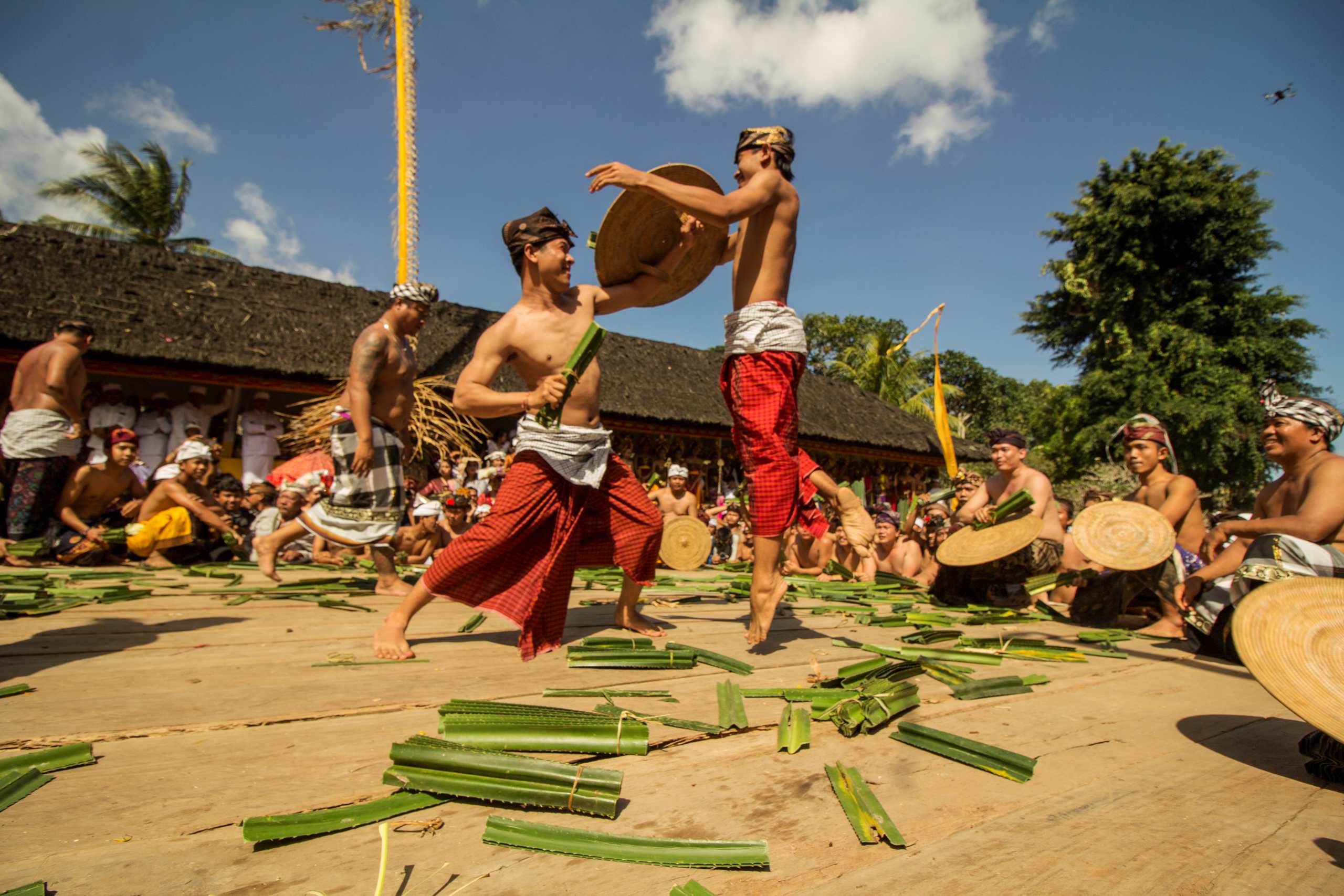
The head of the village will announce the start of the war dance. First things first, he reminds participants of the rules: no real aggression and no dishonest hits below the waist or to the head.
Now, you will see boys and older men gathering in the arena with cheering villagers and girls surrounding it. About 50 men take part every year.
Everyone wears traditional ceremonial attire. Men wear a sarong wrapped around the waist, a sash belt, and an udeng (headpiece), with their chest open. Women take pride in showcasing the geringsing cloth, a traditional textile created in Tenganan village.


What do men use to fight?
Well, they make a special weapon: a 15-centimetre club made of a dozen pandanus leaves, which grow well on the island, tied together. But these leaves aren’t the same Balinese people use for cooking. Each leaf has many sharp thorns, so the club is supposed to cause some real damage.
For protection, men use handmade shieldsand hold them in the right hand. It can be a rattan or bamboo shield.
Participants can choose their opponents. Each fight only lasts for 2-3 minutes. The goal is to rub the club’s thorns into your opponent’s bare skin until first blood is drawn while uplifting gamelan music is playing.
Boys come out of it with scratches, bruises, and a bit of blood, which actually has a symbolic meaning. The blood is an offering to the Lord Indra, a demonstration of respect, maturity, sacrifice, and courage.
Historically, though, the blood was more than just a religious gesture. It was collected and used to dye Geringsingan cloth, a traditional double-woven ikat fabric from the village.
Unmarried women pay close attention to the young men fighting, probably considering the prospects!
After The Fight
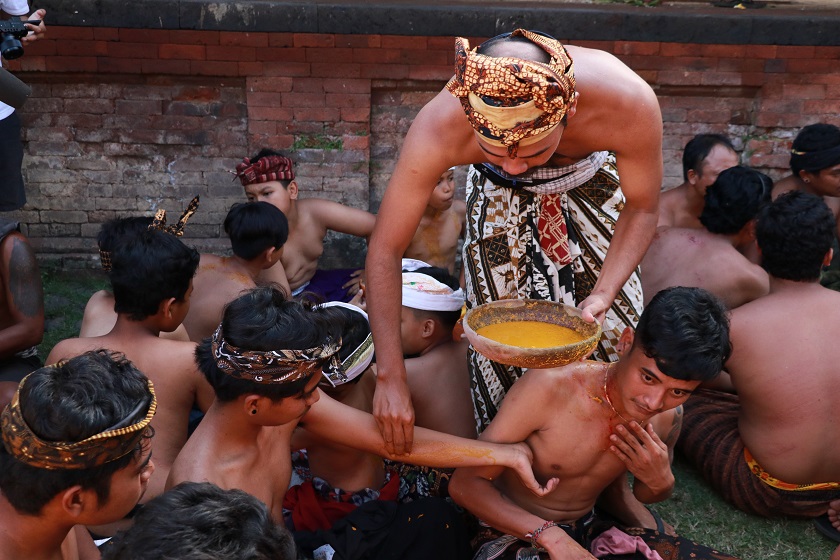
After the duel, the boys hug and proceed to help each other tend to their wounds caused by thorny pandan leaves.
They use homemade ointment boreh kare – a blend of turmeric, galangal, vinegar, coconut oil, arak, and other herbs and spices. The young women of the village make a batch of this remedy as their contribution to this special ceremony.
After that part is done, the boys share a traditional meal together, solidifying that brotherhood feeling.
The whole village comes together for a prayer, dances, and Manyunan.
Manyunan is another part of the Usaba Sambah festival, this time with girls as the main characters. It is a traditional ritual using a special swing. Young women dressed in Gringsing textile take seats and are swung on a tall swing that looks a bit like a Ferris wheel.
Tips For Tourists Joining The Makare Kare Pandan War
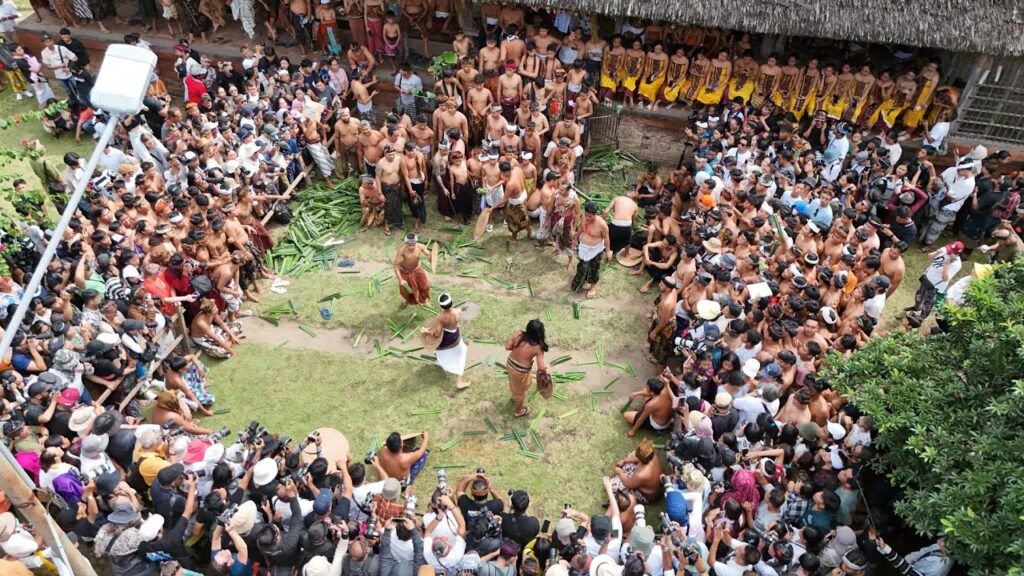
Tourists coming from all over the world today are extremely lucky to be able to see the authentic Pandan festival in Tenganan, as before the 1930s, no outsiders were even allowed to watch the battles!
Today, you can come to visit the village at any time during the festival, you can help in preparations (with a local guide) and even become a participant!
However, you still should be very respectful of the ancient customs.
- It is still a religious festival, so do not bring or consume too much alcohol.
- Take photos and videos only with consent. Double-check with the head of the village if you can use a drone.
- Wear ceremonial clothing.
- Don’t enter the arena or stage unless invited.
FAQs
What Is Mekare Kare?
Mekara Kare or Perang Pandan is one of the names of the iconic ritual battle that traditional Balinese people of Tanganan village hold every year to commemorate ancestors and worship the Lord of War, Indra.
What Happens During Galungan?
During Galungan and Kuningan, Balinese Hindus host a 10-day celebration of the victory of Good over Evil.
This time is special as every Balinese family prepares to welcome the spirits of their deceased ancestors and commemorate them. There are lots of smaller ceremonies, offerings, and a strong sense of united community, family values, and shared joy.
The streets are decorated with Penjor – tall bamboo poles with elaborate accessories, in front of every Balinese house.
What is Perang Pandan?
In Indonesian, Perang pandan literally means Pandan War, and it refers to the ritual that uses pandanus leaves with thorns as a weapon in a duel.
This duel is an ancient religious ceremony celebrated in Tenganan village in Bali to honour God Indra, the lord of war, and to mark the rite of passage to maturity for young men of the village.

Final Thoughts On Makare Kare Festival
Makare Festival is a powerful tribute to the Bali Aga people’s identity and culture, and a unique ritual tourists can witness only in Tenganan village. It is an absolute must-go if you are interested in Balinese culture and traditions.
Other amazing festivals and events to see in Bali are annual Kissing Ritual (Omed-Omedan in Sesetan village, March), Ogoh-Ogoh parade every yeat the night before Nyepi (March, all across Bali), Ubud writers and Readers Festival (October), Ubud Food Festival (June), and Bali Arts Festival with tons of performances and art exhibitions (mid-June to mid-July).