Visiting stunning Balinese temples and shrines is a must for everyone who wants to learn about local customs, traditional architecture, and unique religious beliefs.
Dating back to the 11th century, ancient temples are scattered around the island: on top of the Uluwatu cliffs, volcanic rocks of Tanah Lot, slopes of Mount Agung, lakes, and rainforests.
Worshipping nature, gods, and the universe, these sacred spaces hold the balance and protect the island.
Whether you’re just a curious tourist walking into one of the 20,000 temples in Bali or visiting a temple for a purification ritual, these are the most important rules to follow in Balinese temple etiquette.
Summary Of Temple Etiquette
- Showing respect is the guiding rule for visiting temples that are all active places of worship and sacred sites, not tourist sites or theme parks. Respect comes in the form of modest clothing, humble behaviour, and being considerate of others at all times.
- If visiting temples with kids, it is important to have a conversation with them before coming to decide if it is a good idea for a family day trip or not. Kids should avoid climbing, running, pointing, speaking loudly, and so on.
- If you’re stuck in the street outside the temple behind a procession, don’t honk, argue or try to pass. Take a deep breath, calm down, and take a detour. It doesn’t usually add more than 5 minutes to your trip, but you get to see unique, beautiful parades.
- Many temples require a ticket or a small donation of 20,000-50,000 IDR (2-5 AUD). If you can, leave more and tip your guide, too. This money is used for temple maintenance, offerings, and projects.
Quick Note On Balinese Culture & Main Cultural Differences
Balinese Hinduism is a unique religion followed by more than 85% of all people living in Bali. It isn’t common anywhere else in the world!
As a part of Hinduism, Balinese Hinduism is based heavily on the idea of balance between good and evil, as well as between cosmos, human, and nature. The core Balinese philosophy of Tri Hita Karana suggests people live in harmony with God, other humans, and the environment.
Major temples in Bali are called directional temples. Nine of them protect the island from evil spirits from each direction (North, North-West, etc). Every village and family also has its own, smaller temple, to worship the Ida Sang Hyang Widhi Wasa (main God), deities, and ancestors.
Bali Temple Etiquette Every First-Time Visitor Should Know
Follow The Dress Code
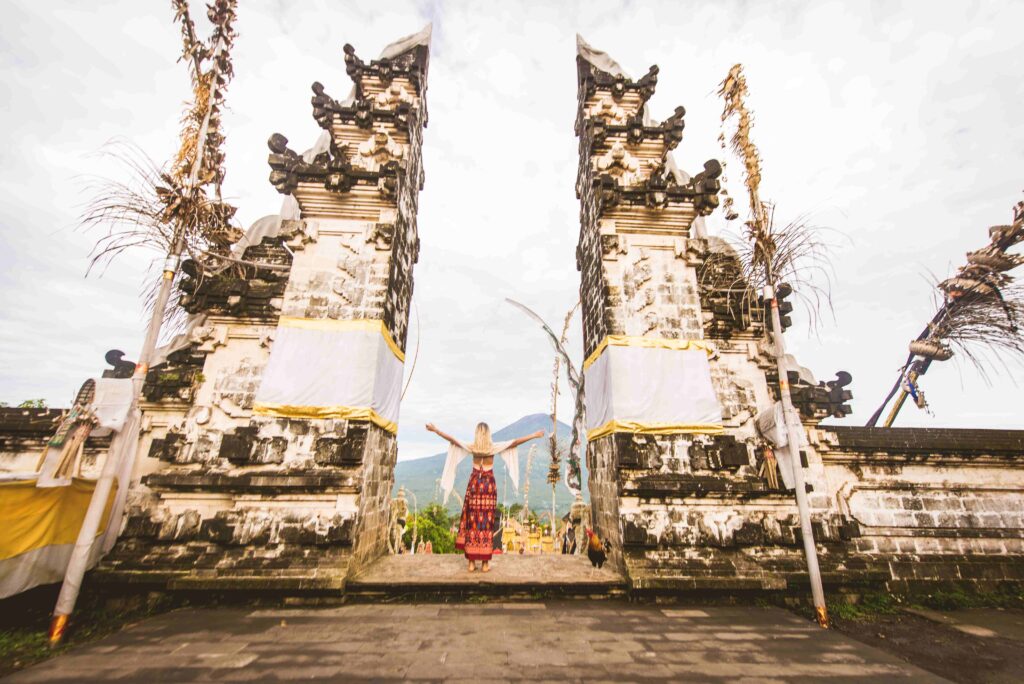
You should dress appropriately to visit any temple, big tourist spot or a small family temple. Modesty is one of the silver linings in the Balinese lifestyle, regardless of age or gender.
No tank tops, shorts, bikinis, so no clothes exposing shoulders, back, or knees. Make sure to wear a T-shirt and bring a sarong.
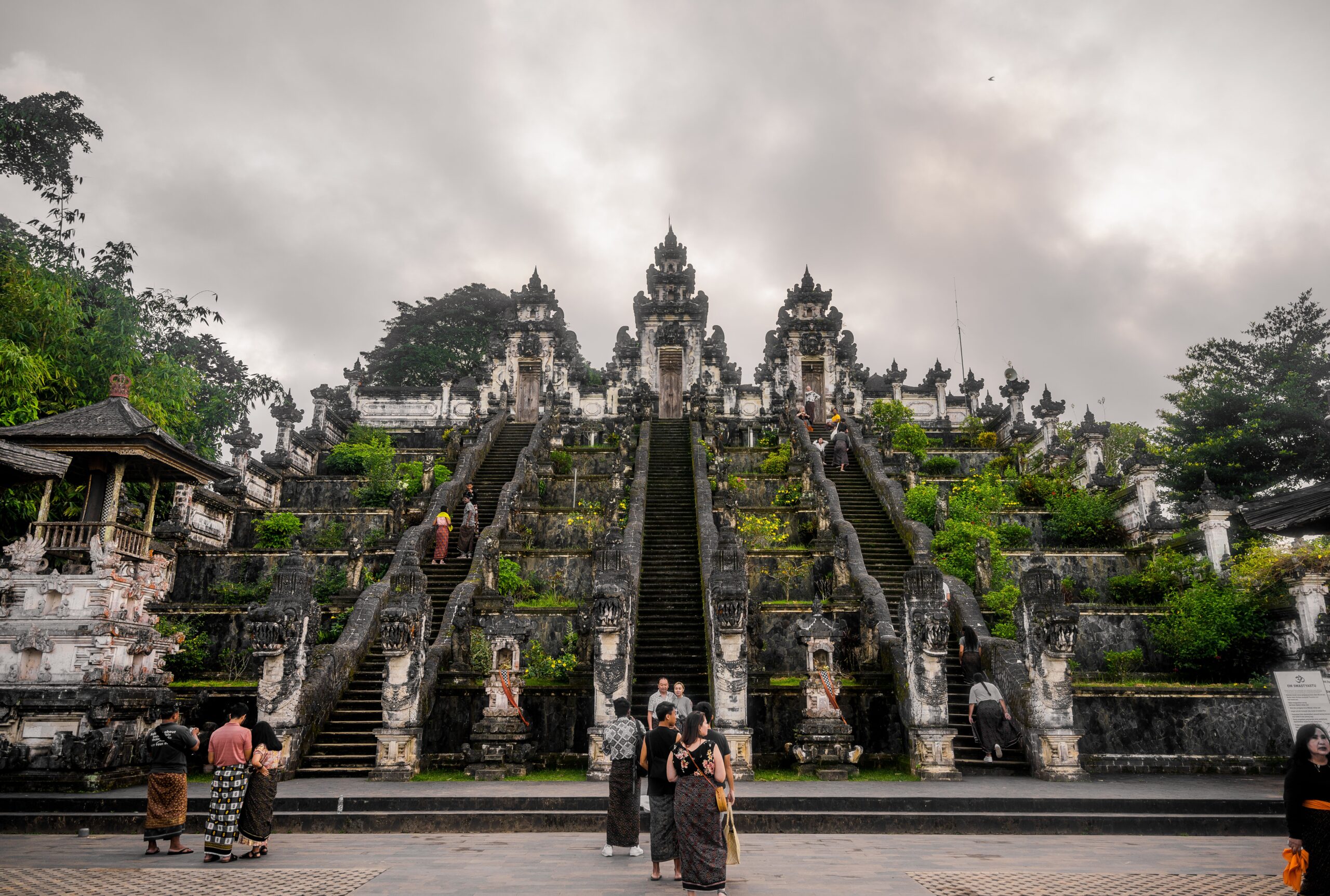
If you don’t have one, bigger temples like Goa Lawah, Lempuayng and other often visited temples will offer you a sarong (for rent) in exchange for a donation. You need to wrap it around your knees to cover them. Then, you need to tie up a simple textile scarf (sash) as a belt.

This applies to both men and women, and Hindu and Buddhist temples in Bali. Kids visiting a temple also wear a sarong, a sash, and a long-sleeved shirt. Sometimes a headpiece is recommended, too, if it is a big ceremony.
You can arrive at the location wearing any shoes you like, but you will need to take them off. Visiting a temple always barefoot, which means you must make sure your feet are clean.
You don’t have to wear a full traditional dress, though, called kebaya, unless you’re invited to a special spiritual event or religious processions like a funeral, temple anniversary, house blessing, etc.
If you’re exploring a deeper connection with Hinduism and say little prayers at your villa by the family temple, you should also dress appropriately for that. And ideally, only “addressing” gods after taking a shower as well.
Avoid Pointing With Your Index Finger

Avoid pointing fingers (it goes to kids as well) at anyone or anything. It is generally a polite thing to do, but it is especially important on the sacred grounds.
Both you and the temple guardians will feel awkward about it.
Don’t Use Your Left Hand
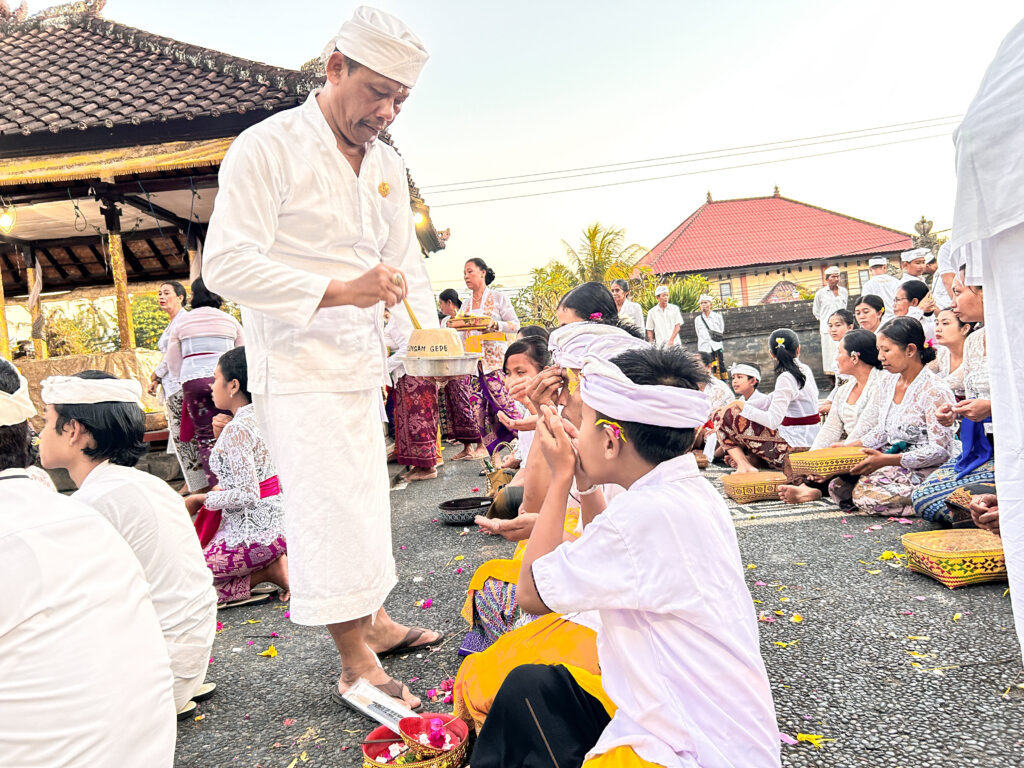
A temple is a holy place, and using the left hand to receive or give an offering here may seem unclean to locals, as Balinese and Indonesians often use squatting toilets or a regular one, but without toilet paper, as they prefer to wash off immediately.
The left hand is used for that hygienic procedure, which makes it less appropriate for any religious purposes, as you can imagine!
Menstruating Women Can’t Enter The Temple

Temple grounds are unfortunately out of the question for any women currently on their period, who recently given birth (6 weeks), or are pregnant.
According to ancient beliefs, blood is unclean, so bleeding women are in an unclean state (cuntaka).
To be fair, if you have an active bleeding or a gnarly wound that is bleeding, you can’t enter either, even if you’re a man.
Try Not To Step On Canang Sari Offerings
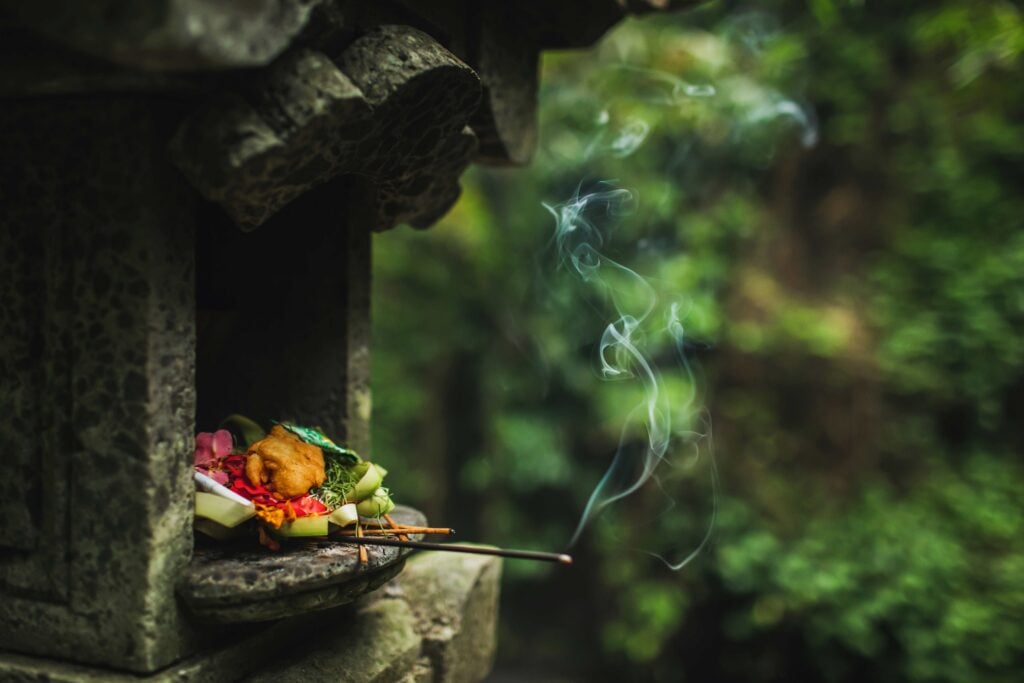
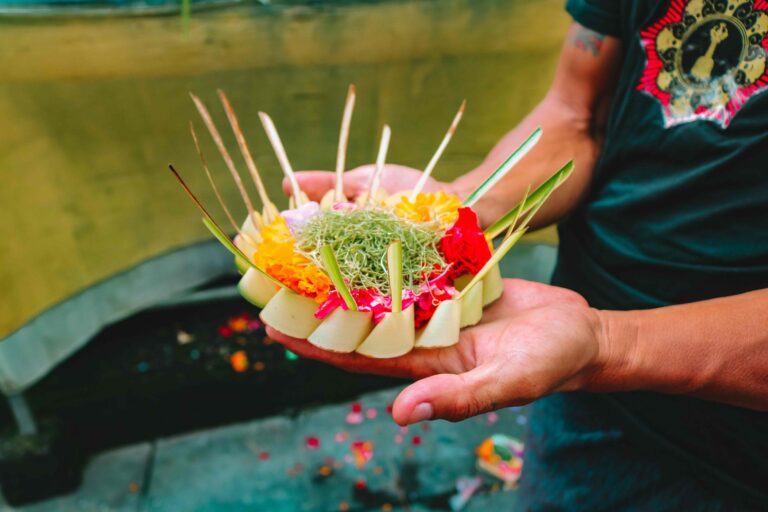
Canang sari are small offerings that accompany the daily life of the Balinese. You may see them even outside temples, on the ground in front of houses and shops, filled with flowers, incense sticks, and snacks.
Keeping these daily offerings intact is one of the small basic courtesies Westerners can show.
Of course, sometimes we may step without looking, by mistake. Balinese people won’t scold you; the local community is extremely kind and understanding, so simply apologise and try to be more mindful of your steps (or bike when parking) next time.
When entering the temple, you can slightly bow to show respect.
Do Not Use Flash Photography
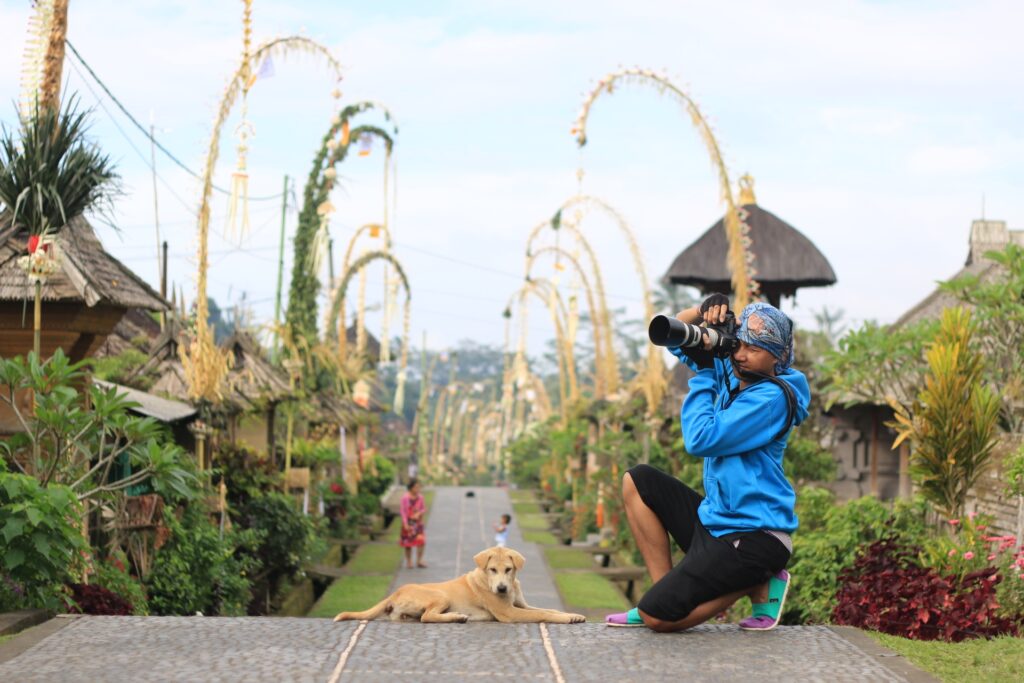
When taking photos, keep in mind some very simple photography rules for temple grounds.
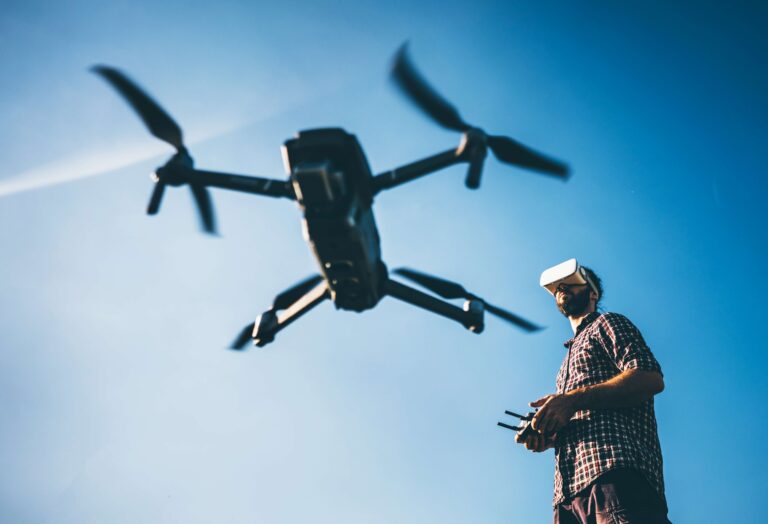
In most temples, drones are not allowed, alongside vlogging, flash photography, posing to take a perfect shot, and climbing gates or statues for a better angle.
You are more than welcome to take a few pics, but make sure not get other people in without their consent or cut off sacred statues – it will be considered disrespectful.
Avoid Loud Conversations
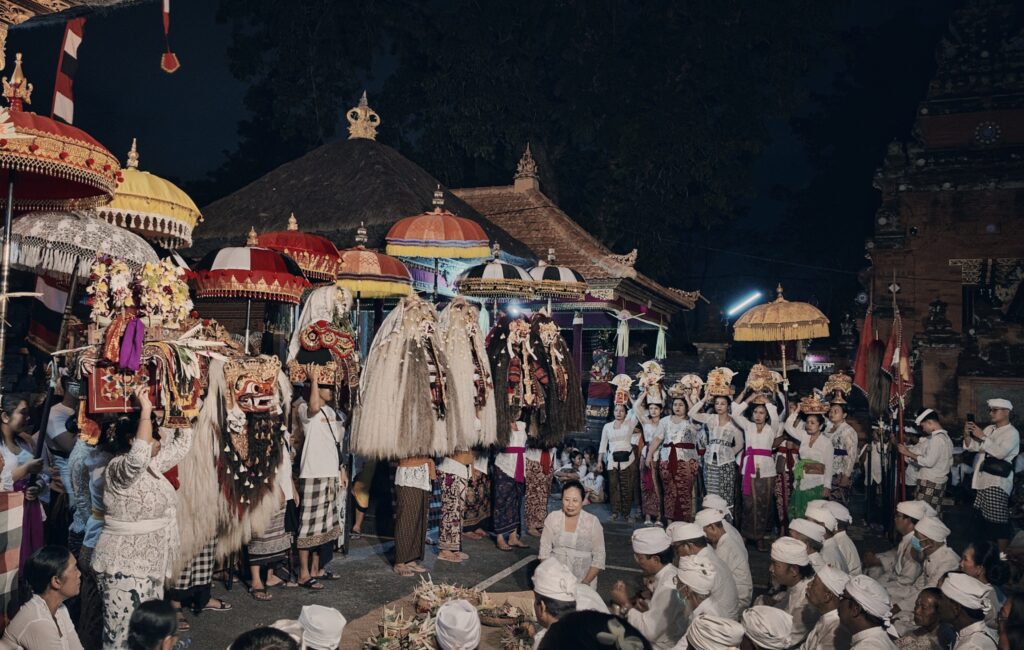
Speak softly and gently, or rather, stay quiet and take this moment to reflect, think positively, and even get into a meditative state.
Speaking loudly, arguing, or showing anger equals losing face in the local culture and is considered disrespectful. The same goes for overly exciting exclamations.
Remember a greeting in the Balinese language: Om Swastiastu. You can simply use it as a polite greeting or as an “excuse me” if you want to ask something and do so respectfully.


Rely On Your Common Sense
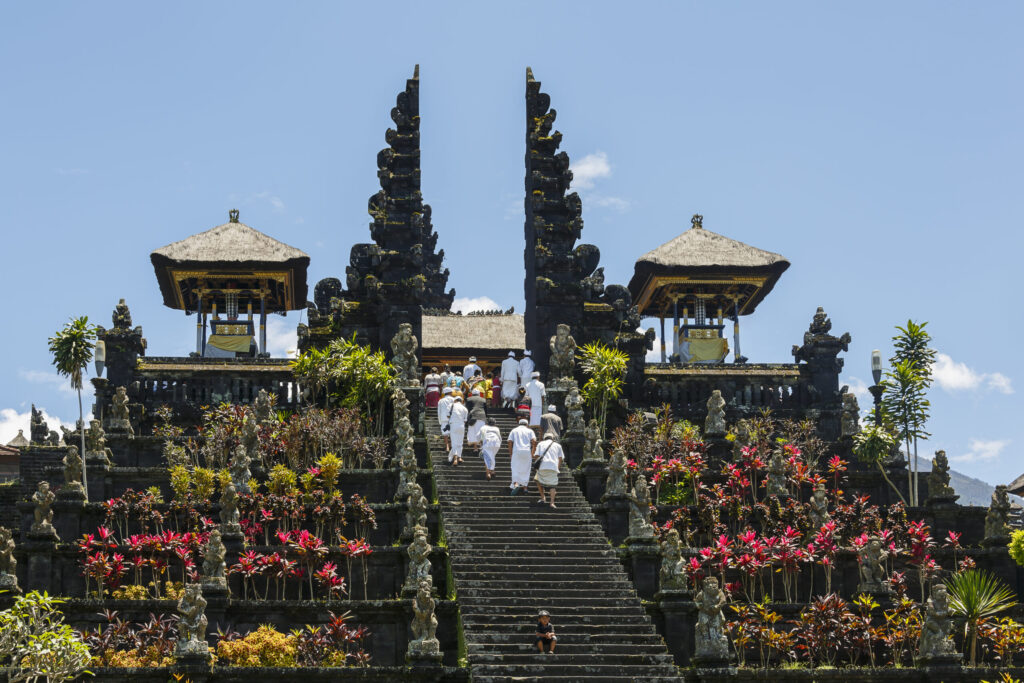
Think about things not allowed in any other religious sites: public displays of affection, taking calls, cursing or arguing, touching or playing with sacred objects, and so on.
Observe quietly how temple staff and the Balinese approach the priest, holy objects, and outfit, and follow local guidance. Do not enter the inner sanctum. While major temples are open to tourists, there are still parts you can’t and should not go.
It is generally a good idea not touch strangers, but in Balinese culture, touching someone’ss head is a particularrly no go. For the Balinese, the head is the home of our soul, so no one should touch it.
Bali Temple Etiquette For Praying
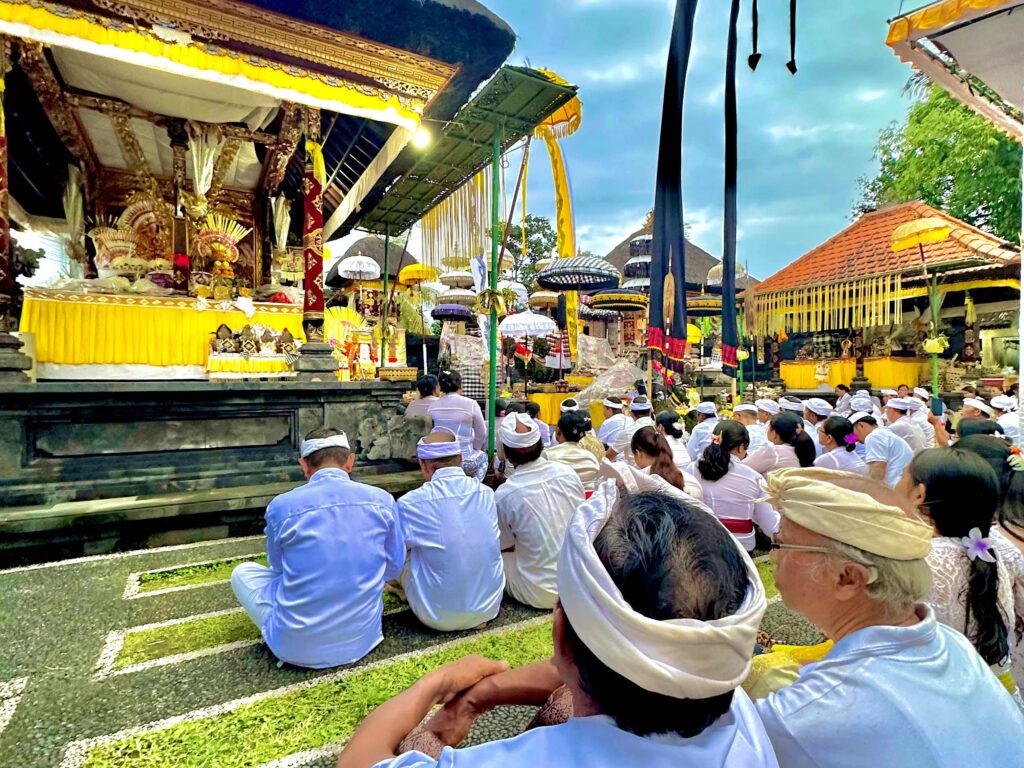
If you’re taking part in ceremonies, purification rituals, or visiting a temple to pray, there are some extra rules to be mindful of.
In Balinese Hinduism and many other Asian cultures, feet, especially shoes, are considered disrespectful or dirty. So we never wear shoes in the Balinese temples, but also, we don’t point our feet towards the altar. Feet should also not point at high priests, holy objects in the inner shrine, or be used to push or kick anything on the temple grounds.
Men should have their legs crossed, while women should kneel to pray. Put palms of your hands together in front of your chest (heart-level) and bow your head slightly.
At the same time, no one should sit higher than a priest or certain sacred objects. So just follow local guidance!
Moving Around The Temple Grounds
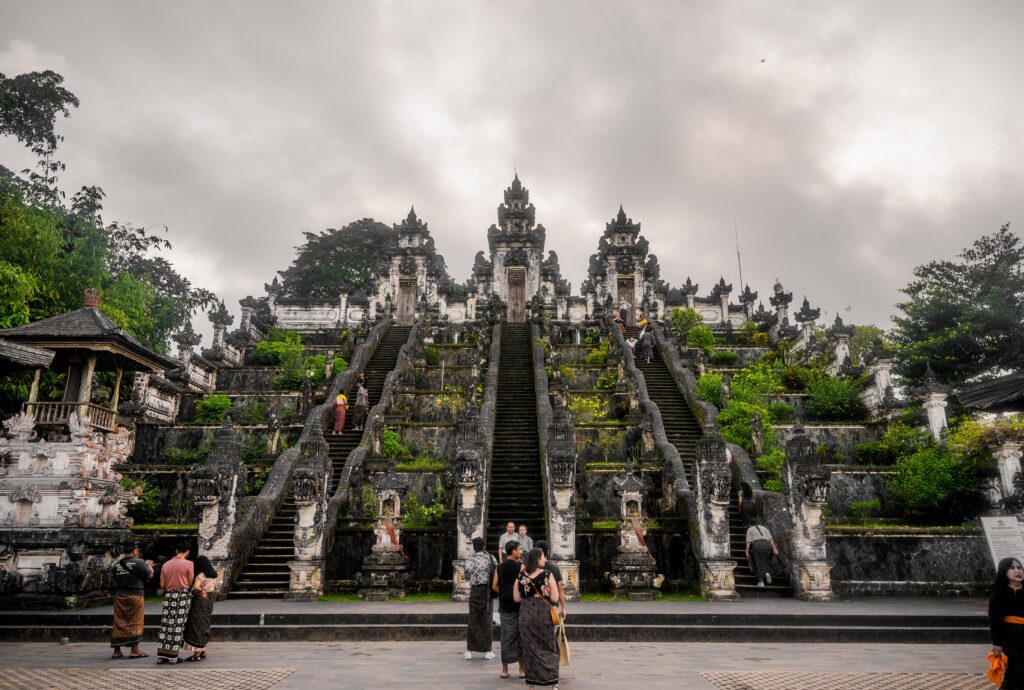
The rule of thumb is to move clockwise within the temple and not obstruct any ceremonies going on.
Often, temple staff will show you where you can or can’t walk. Most likely, you can’t climb anything, step above sacred objects or praying groups, especially led by a manku (priest), or walk through a ceremony.
We would recommend keeping a distance and observing respectfully.
Many temples, like Uluwatu Temple or temples in Ubud, have monkeys living around. They will most likely try tosteal something, so make sure not to bring any food or carry things in your hands to not provoke them.
FAQs
Do Men Need To Cover Their Knees In Bali Temples?
Yes, you need to dress modestly and wear a sarong – a cloth wrapped around your waist and covering your knees. Not to worry, many temples let you rent one and will help you dress up; it will be included in the ticket price or offered in exchange for a donation.
Make sure to wear a long sarong. When you sit cross-legged in the temple, your knees should still be covered!
Is It Okay To Wear Red In Bali?
Yes, wearing red is totally normal in Balinese temples or just in the street. It has no negative meaning in clothing for Indonesians.
It is much more important to wear modest clothing to religious sites, rather than wearing a certain colour. Cover your back, shoulders, and knees with a light shirt, a sarong, and a little sash.
Can I Wear Shorts In Uluwatu Temple?
No, no shorts are allowed in Uluwatu temple or any other Balinese temple. Wear long skirts or pants, or wrap a sarong as a skirt to cover your legs.

Final Thoughts On Balinese Temple Etiquette
Respecting one’s religion and culture while being a guest is a non-negotiable. These simple rules will make sure a temple visit is more than a sightseeing but a meaningful experience for you.
Your genuine interest in culture, history and Balinese life is a must. Balinese temples hold a vast spiritual heritage, and your local guide will be happy to tell you all about it. Just ask and listen with an open mind (and heart).